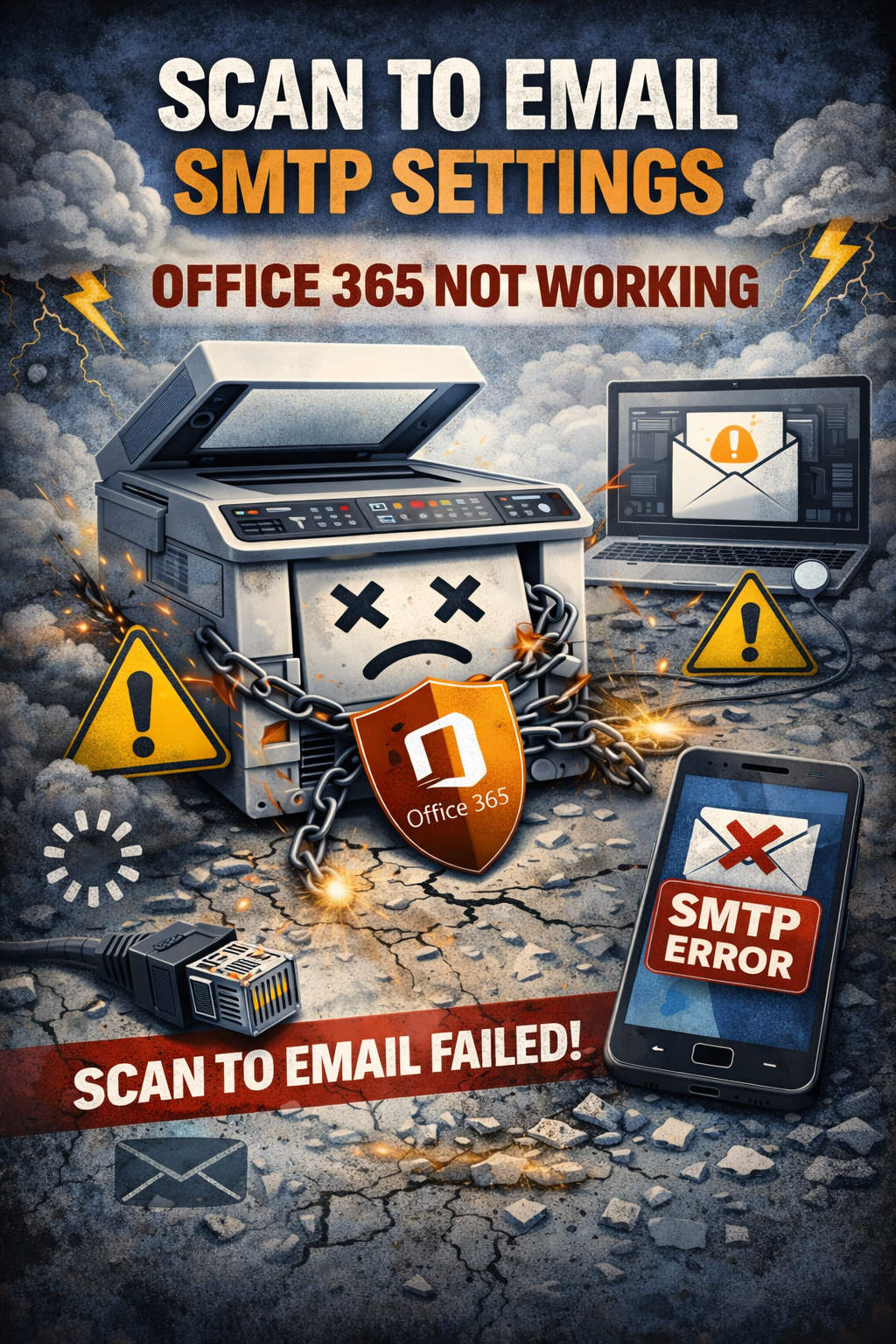
Scan to email SMTP settings Office 365 not working is a common issue experienced by businesses, offices, schools, and organizations that use multifunction printers or scanners to send scanned documents through Microsoft 365 email services. Scan-to-email functionality allows devices to send scanned files directly to email addresses using SMTP, also known as Simple Mail Transfer Protocol. When SMTP settings stop working correctly, scanned emails may fail to send, authentication errors may appear, or devices may lose connection with Microsoft 365 servers completely.
Modern office environments depend heavily on scan-to-email functionality for sharing invoices, reports, contracts, forms, and business documents quickly. Even a small SMTP configuration error can interrupt workflow, delay communication, and reduce productivity significantly.
Microsoft 365 requires accurate SMTP settings, secure authentication, and proper encryption protocols for successful scan-to-email communication. Recent Microsoft security updates have also introduced stricter authentication policies to protect users from spam, phishing attacks, and unauthorized access attempts.
Understanding why scan-to-email SMTP settings fail in Office 365 helps users troubleshoot issues effectively while restoring reliable document-sharing functionality quickly and securely.
Common Reasons Behind Office 365 Scan-To-Email Failures
SMTP scan-to-email issues usually occur because of incorrect configuration details, authentication restrictions, or outdated device compatibility problems. Even properly connected printers may fail if SMTP settings are incorrect.
Below are some common causes of Office 365 scan-to-email SMTP failures:
- Incorrect SMTP server address configured inside printer settings
- Wrong SMTP port number selected during setup process
- SMTP AUTH disabled inside Microsoft 365 mailbox settings
- Invalid username or outdated password causing authentication failures
- TLS encryption disabled or configured improperly on the device
- Multi-factor authentication blocking standard SMTP login methods
- Firewall restrictions blocking outbound SMTP communication traffic
- Outdated printer firmware lacking Microsoft security compatibility support
- Incorrect DNS settings preventing Microsoft server communication successfully
- Microsoft spam protection policies blocking outgoing device emails
One major reason behind scan-to-email failures involves Microsoft disabling legacy authentication methods for older printers and scanners. Many older devices still attempt to connect using outdated security protocols no longer supported fully by Microsoft.
Another common issue occurs when administrators enable multi-factor authentication on Microsoft accounts. Most printers and scanners cannot complete advanced authentication verification directly, requiring app-specific passwords instead.
SMTP AUTH may also be disabled automatically by Microsoft for unused accounts or restricted mailboxes, preventing scan-to-email communication entirely.
Identifying Symptoms Showing SMTP Scan-To-Email Problems
Users and IT administrators usually notice several warning signs when Office 365 scan-to-email settings stop functioning correctly. Recognizing these symptoms early helps reduce workflow disruptions and communication delays.
One common symptom is failed document delivery from printers or scanners. Devices complete the scanning process successfully but fail to send the scanned file through email afterward.
Authentication failure messages frequently appear directly on printer control panels or scanner interfaces. Errors such as “SMTP Authentication Failed” or “Login Unsuccessful” usually indicate incorrect credentials or blocked authentication methods.
Connection timeout errors are another major symptom. Devices cannot establish secure communication with Microsoft 365 SMTP servers because of incorrect ports, firewall restrictions, or disabled encryption settings.
Some users notice repeated password prompts during device configuration because Microsoft continuously rejects authentication attempts from the printer or scanner.
Bounce-back notifications or undelivered email reports may additionally appear if scanned documents fail after partial SMTP communication.
Businesses relying heavily on scan-to-email workflows may also experience delayed document processing, failed invoice delivery, or interruptions in daily administrative operations.
In severe cases, organizations may lose complete scan-to-email functionality, forcing employees to transfer scanned documents manually through USB devices or local computers.
Correct Office 365 SMTP Settings Required Properly
Accurate SMTP configuration is essential for successful scan-to-email functionality through Microsoft 365. Incorrect setup details remain one of the leading causes of communication failures.
Standard Office 365 SMTP settings for scan-to-email usually include:
- SMTP Server: smtp.office365.com
- SMTP Port Number: 587
- Encryption Method: STARTTLS or TLS enabled
- SMTP Authentication: Enabled properly
- Username: Full Microsoft 365 email address
- Password: Current password or app-specific password
Port 587 is Microsoft’s recommended SMTP submission port because it supports secure encrypted communication using TLS protocols.
Correct username formatting is extremely important because most printers require the full Microsoft 365 email address rather than only the username portion.
Users with multi-factor authentication enabled may need to create app-specific passwords through Microsoft account security settings. Standard passwords often fail on older printers lacking advanced authentication compatibility.
Some organizations may additionally configure:
- Exchange Online SMTP relay connectors
- Authorized public IP addresses
- SPF DNS records properly
- Approved sending domains inside Microsoft 365
These additional settings help Microsoft verify legitimate outgoing scan-to-email traffic securely.
Administrators should also ensure SMTP AUTH remains enabled for the mailbox used by the printer or scanner because Microsoft may disable SMTP authentication automatically in some environments.
Troubleshooting Office 365 Scan-To-Email SMTP Issues Successfully
Fixing scan-to-email SMTP problems usually requires systematic troubleshooting to identify the exact source of the communication failure. Most issues can be resolved successfully through careful verification procedures.
The first troubleshooting step should involve checking internet connectivity carefully. Weak or unstable network connections frequently interrupt secure SMTP communication between printers and Microsoft servers.
Users should then verify all SMTP settings inside the printer or scanner configuration panel carefully. Incorrect server names, usernames, passwords, ports, or encryption methods commonly cause setup failures.
Re-entering account credentials manually is another important troubleshooting method because saved passwords often become outdated after Microsoft account password changes.
Administrators should additionally verify whether SMTP AUTH remains enabled inside the Microsoft 365 admin center for the mailbox associated with the scanning device.
Updating printer firmware is equally important because older firmware versions may not support Microsoft’s modern TLS encryption standards fully.
Temporarily disabling firewall filtering or antivirus email scanning may help identify whether security software blocks SMTP communication unexpectedly.
If multi-factor authentication remains enabled, generating app passwords may immediately resolve authentication failures for printers and scanners lacking advanced authentication support.
Users may also test SMTP connectivity using Microsoft Remote Connectivity Analyzer tools or network diagnostics to confirm whether port 587 remains accessible successfully.
Reviewing Microsoft 365 message trace logs can additionally help administrators identify rejected messages, blocked authentication attempts, or spam-related restrictions affecting scan-to-email functionality.
Preventing Future Office 365 Scan-To-Email Problems Successfully
Preventing SMTP scan-to-email failures requires proactive maintenance, updated software, and proper authentication management. Small preventive measures can significantly improve long-term reliability.
Organizations should regularly update printer firmware, operating systems, and network equipment to maintain compatibility with Microsoft’s evolving security standards and encryption technologies.
Using dedicated service accounts for scan-to-email communication is another recommended best practice because it improves authentication management while reducing account conflicts.
Administrators should monitor Microsoft 365 security settings regularly because Microsoft frequently updates SMTP authentication requirements and spam protection policies.
Proper firewall configuration remains equally important for maintaining reliable scan-to-email communication. IT teams should allow secure outbound SMTP traffic through approved Microsoft ports without unnecessary restrictions.
Regularly reviewing DNS records, SPF configuration, Exchange Online connectors, and mailbox permissions additionally improves email authentication reliability significantly.
Monitoring account password expiration policies also helps organizations avoid unexpected authentication failures caused by outdated credentials.
Businesses depending heavily on document scanning workflows should periodically test scan-to-email functionality to identify problems before operational disruptions occur.
Employee training additionally helps reduce manual configuration errors during printer installation, password updates, or device replacement procedures.
Resolving Office 365 Scan-To-Email Issues Successfully
Scan to email SMTP settings Office 365 not working can create serious communication challenges for businesses and organizations relying on digital document-sharing workflows. Since SMTP controls outgoing email communication, proper configuration remains essential for reliable scan-to-email functionality.
Fortunately, most scan-to-email issues result from manageable causes such as incorrect server settings, disabled SMTP AUTH, outdated firmware, firewall restrictions, or authentication conflicts. Careful troubleshooting and accurate configuration usually restore functionality successfully.
Understanding how Office 365 SMTP scan-to-email settings work helps users and administrators identify problems faster while improving long-term email reliability. Verifying server details, enabling TLS encryption, updating firmware, and maintaining secure authentication practices are essential steps for dependable document communication.
Modern cybersecurity standards continue evolving rapidly, making updated encryption methods and secure authentication increasingly important for Microsoft 365 compatibility. Organizations must ensure their devices remain aligned with Microsoft’s latest security requirements.
By following proper setup procedures and maintaining proactive system management, users can reduce future scan-to-email SMTP failures while improving the reliability, security, and efficiency of their overall business communication infrastructure.
Also Read: Sling Streamlines Workforce Scheduling Across Modern Business Operations
Source: Scan to Email not working anymore (trying to use smtp.office… – HP Support Community – 9212134