
For decades, wildlife enthusiasts, hunters, and land managers relied on a simple formula: hang a trail camera, wait weeks, retrieve the SD card, and pray the batteries hadn’t died. This process was inefficient, intrusive, and often left users with outdated information. The arrival of cellular trail cameras changed the game, but Spypoint didn’t just join the revolution; they pioneered it.
Spypoint has established itself as the dominant force in the cellular scouting market by solving the two primary hurdles for users: cost and complexity. While competitors focused on traditional megapixel wars, Spypoint recognized that the experience of receiving images seamlessly was what truly mattered.
This article explores how Spypoint became the go-to brand for modern woodsmen and women, detailing their innovative hardware, their game-changing app ecosystem, and why their commitment to accessibility has redefined the industry.
The Problem with Traditional Scouting
Traditional trail cameras—often called ‘SD card cameras’—have significant limitations. Every time a user visits a camera site to retrieve the card, they leave behind human scent, disturb the area, and potentially pressure the very animals they are trying to monitor. Furthermore, a camera may fail (due to a full card or dead batteries) minutes after you leave, and you won’t know it until your next visit, potentially weeks later. This lag time makes real-time strategy impossible.
The Cellular Revolution, Made Simple
Spypoint’s mission was simple: make cellular scouting affordable and easy enough for anyone to use. Their breakthrough was not just in the hardware, but in the delivery model. By partnering directly with major cellular carriers, Spypoint offered pre-activated SIM cards that connected automatically to the strongest available network, eliminating the need for users to manage third-party data plans.
The Hardware: Designed for the Woods
Spypoint cameras are defined by rugged reliability and specific, user-focused features. They aren’t designed to be delicate pieces of studio equipment; they are built to survive rain, snow, and triple-digit heat.
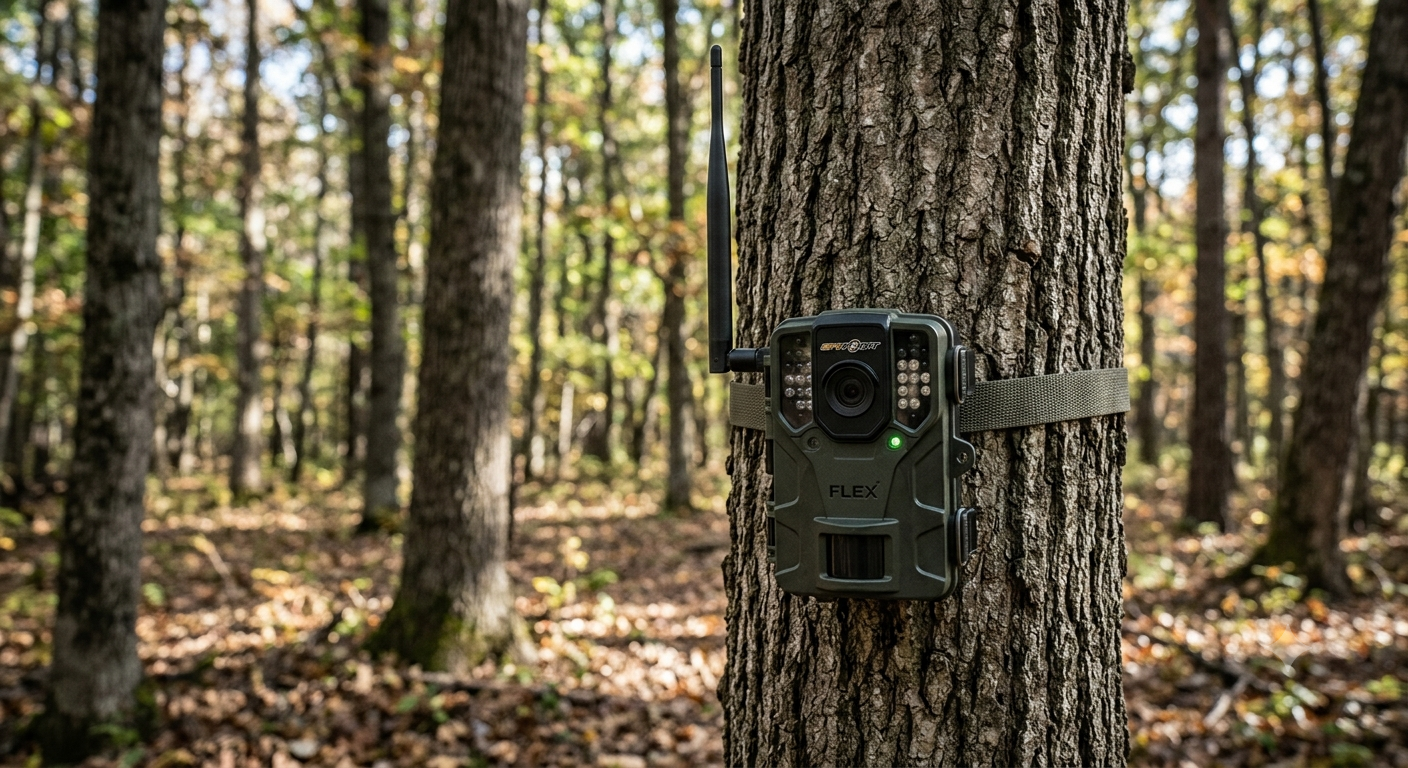
- The FLEX Series: Representing the current pinnacle of their lineup, cameras like the FLEX (featured in the image) utilize a dual-SIM configuration. This allows the camera to automatically connect to the strongest network provider (whether Verizon, AT&T, etc.) and seamlessly swap if coverage changes. This ensures maximum uptime in remote areas.
- The LINK-MICRO Family: This series redefined the market by proving a cellular camera could be tiny and affordable. The LINK-MICRO revolutionized entry-level scouting, making it feasible for a hunter to deploy five cellular cameras for the price of one competitor’s high-end model.
- Integrated Solar Tech: Models like the LINK-MICRO-S-SOLAR feature integrated solar panels and an internal rechargeable battery pack, virtually eliminating the most significant ongoing cost and maintenance issue: battery changes.
The Brains of the Operation: The Spypoint App
The hardware is only half the story. The true magic of the Spypoint system lies in their mobile application, a sophisticated digital hub that processes thousands of images a day. The app is not just a viewer; it is a management and intelligence tool.
The Free Data Plan: Lowering the Barrier
Perhaps Spypoint’s single most disruptive innovation was the introduction of the Free Data Plan. Recognizing that many users were hesitant to commit to monthly fees, Spypoint offered 100 images per month, per camera, for free, forever. While 100 images isn’t enough for a busy feeder, it is perfect for monitoring a scrape or a remote trail. It allows users to “get their feet wet” with cellular tech without any financial risk. This single decision did more to popularize cellular scouting than any marketing campaign.
BUCK TRACKER AI: Turning Images into Intel
Managing thousands of pictures can become a full-time job. Spypoint solved this with BUCK TRACKER, an artificial intelligence image recognition system. When an image is uploaded, the AI instantly analyzes it. Is it a person? A vehicle? A deer? A turkey?
Furthermore, BUCK TRACKER can specifically identify antlered bucks. This allows users to filter their entire feed instantly. Instead of scrolling through 500 photos of wind-blown branches or does, a hunter can simply select “Bucks” and see only the relevant mature animals they are patterning. This converts raw data into actionable intelligence.
Mapping, Weather, and Strategy
The app continues to evolve. Recent updates have integrated full mapping capabilities, allowing users to drop pins for camera locations, tree stands, and food plots. When combined with integrated weather and wind forecasting, the Spypoint app becomes a complete digital hunting planner. You can check your camera, check the wind, and plan your approach, all from the palm of your hand, miles from the woods.
The Ecosystem: Solar, Power, and Security
Spypoint understands that a camera system is only as good as its weakest link. They offer a complete ecosystem of accessories. Their Lithium Battery Packs (like the LIT-10 and LIT-22) offer far superior cold-weather performance and longevity compared to standard AAs.
Furthermore, external solar panels (like the SPLB-22) can keep even non-solar cameras running indefinitely. For security, Spypoint provides robust steel security boxes (bear boxes) and cable locks, protecting the valuable investment from both animals and theft.
The Future of Scouting
Spypoint has redefined wildlife monitoring by focusing on the total user experience. They understood that affordability, ease of use, and intelligent data management were the keys to unlocking the true potential of cellular technology. By making the technology accessible to everyone—from the budget-conscious weekend warrior to the professional land manager—Spypoint has ensured that the future of scouting is connected, immediate, and intelligent.
Also Read: The Genesis: Printing for the Railroad Boom – My Tech Blaze
Source: Leading Trail Camera Solutions – Cellular, Smart, Powerful | SPYPOINT